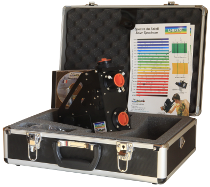
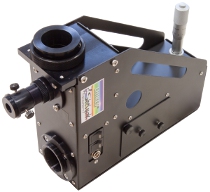
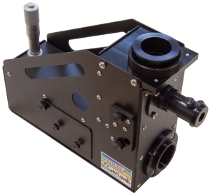
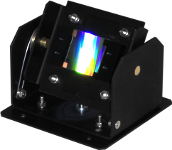
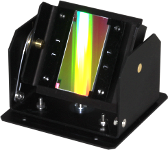
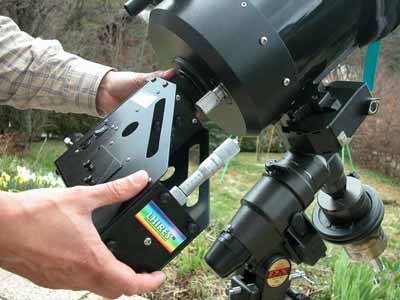
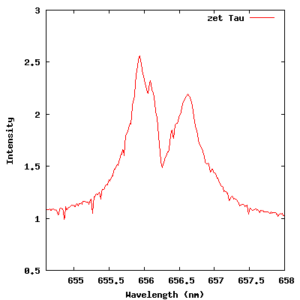
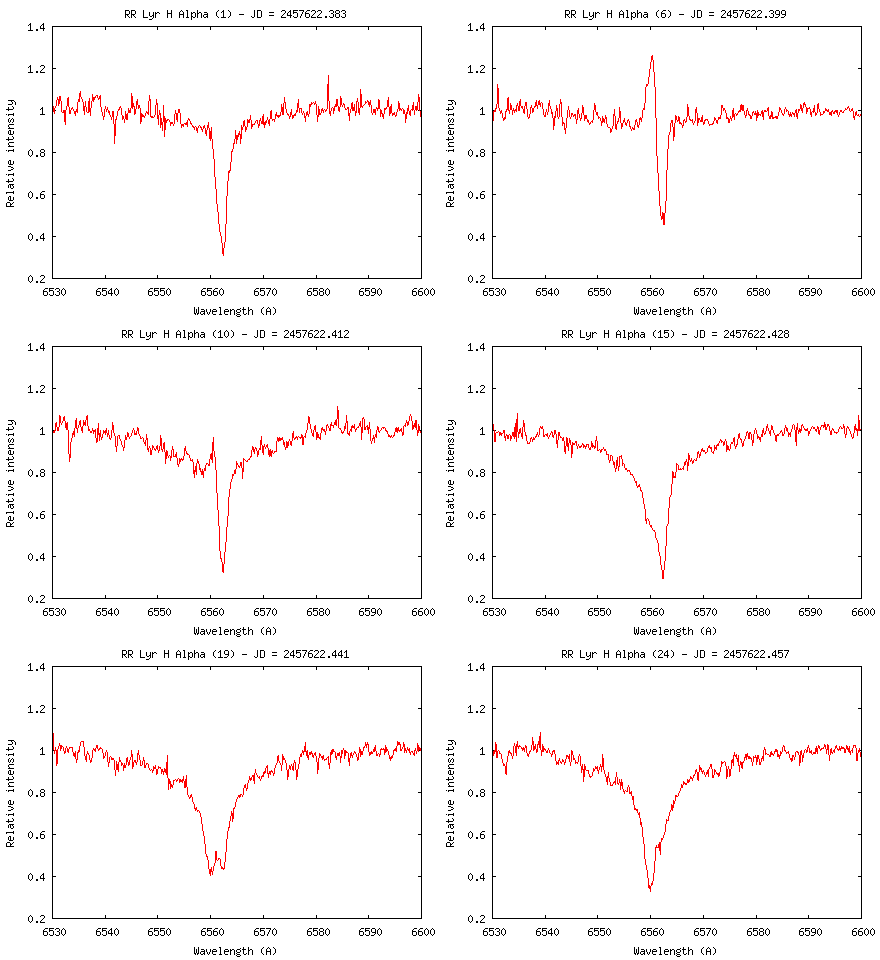
The Lhires III spectroscope is the king of High Resolution (R = 18,000). Shelyak’s historic instrument was designed to observe details in one (or more) spectral lines. It’s the ideal tool for working with the Doppler effect and observing star activity.
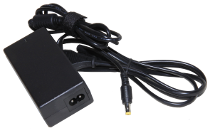
12V power supply (7A), to power several accessories (cameras, lamps, etc.). Supplied with 5m silicone cable and 4 connectors (2x 2.5 mm and 2x 2.1 mm)
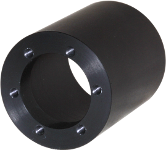
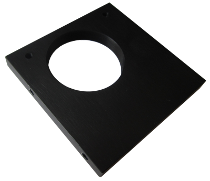
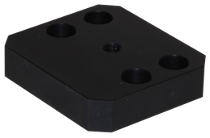
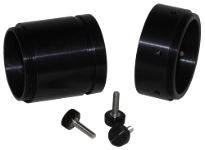
Set of acquisition camera adapters: backfocus 13 mm
SE0110
Rings
For cameras with backfocus from 11 to 15 mm
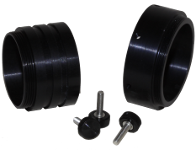
Set of acquisition camera rings: backfocus 23 mm
SE0012
Rings
For cameras with backfocus from 21 to 25 mm
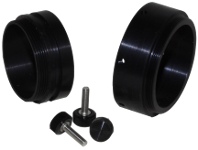
Set of acquisition camera adapters: backfocus 17 mm
SE0014
Rings
For cameras with backfocus from 15 to 19 mm
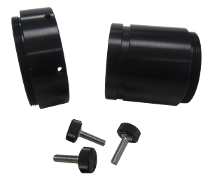
Set of acquisition camera adapters: backfocus 25 mm
SE0080
Rings
For cameras with backfocus from 23 to 27 mm
Set of acquisition camera adapters: backfocus 34 mm
SE0082
Rings
For cameras with backfocus from 32 to 36 mm
2-inch adapter
BA0001
Rings
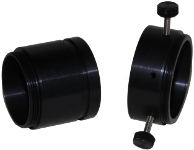
2″ nosepiece for Lhires III. Allows the Lhires III to be mounted on a telescope with a 2″ (50.8 mm) eyepiece holder.
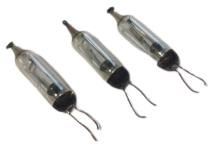
Spare Ar-Ne lamp
SE0148
Spare lamps
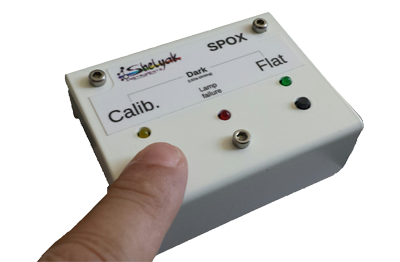
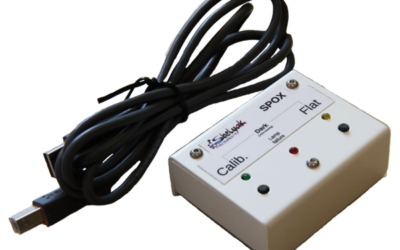
Spare calibration lamp (Argon & Neon). Requires the calibration module.
All about the Lhires III spectroscope:
Description
An instrument of reference
The Lhires III spectroscope is Shelyak Instruments’ “historic” instrument. Designed from the CNRS Astrophysics School in 2003 for the observation of Be stars, it has since found a wide range of applications.
Resolution & spectral range
With a resolving power of R=18,000, it provides access to Doppler velocity measurements, as well as incredible detail in the profile of a line.
The network module supplied as standard has 2400 lines/mm, giving full resolution. It can be replaced by an optional module, to access other resolutions – making the Lhires III a versatile instrument. You can adapt your resolution to your project. Weaker objects are then accessible: Novae, bright comets…
The spectral range covered is limited (of the order of ten nanometers, due to the need for high resolution), but you can select any wavelength in the visible range (400-750nm), thanks to a micrometer.
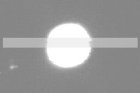
Numerous educational projects based on the Doppler effect are now possible, such as the rotation of Jupiter or Saturn.
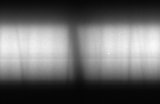
Example of a spectrum of Jupiter,
showing the planet’s rotation
(inclination of the solar lines).
Aperture
The F/10 aperture makes it particularly well suited to Schmidt-Cassegrain telescopes. But it can also be mounted on other, more open instruments (by adding a Barlow lens).
Guiding system
Thanks to its mirror slit, the Lhires III enables the target star to be precisely positioned and held in the slit. A guiding camera (not supplied) enables the telescope’s movements to be controlled (autoguiding), ensuring optimum observation.
Interchangeable slit
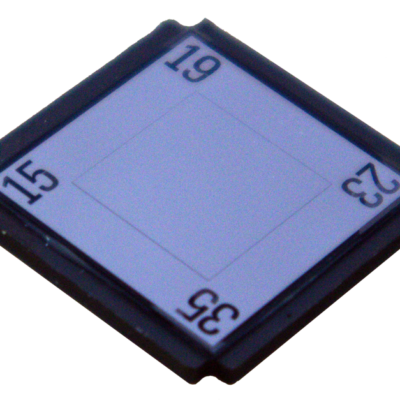
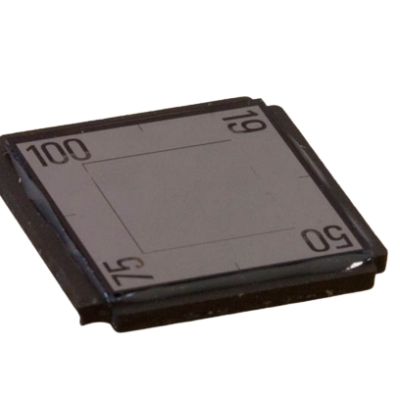
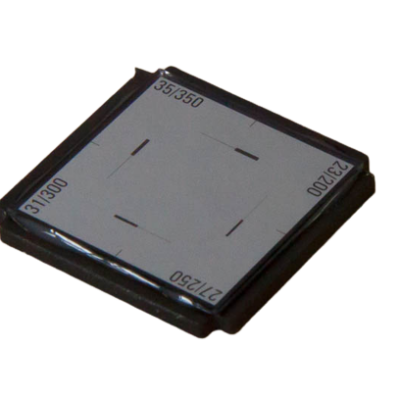
The interchangeable slit supplied as standard (15-19-23-35µm) means that the instrument can be adapted to most observations, giving priority to resolution or brightness if required. Other slits are also available as options (wide slits, photometric slits), to further extend the possibilities.
Mechanical interfaces
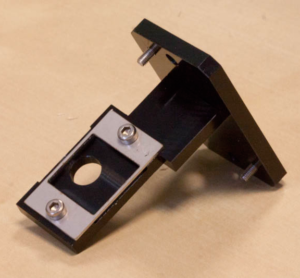
The Lhires III is supplied with a standard interface for Schmidt-Cassegrain telescopes. If you wish to adapt it to a 2″ eyepiece holder, use the optional 2″ adapter.
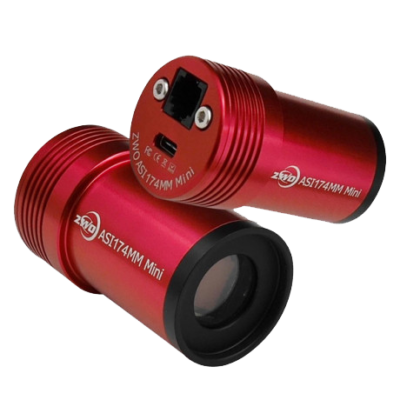
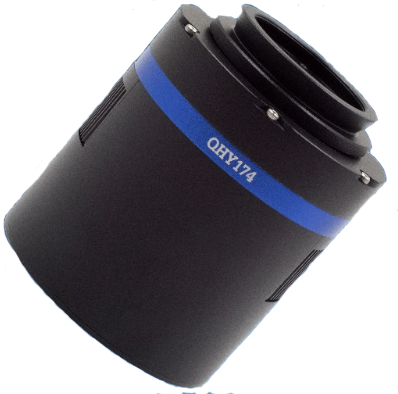
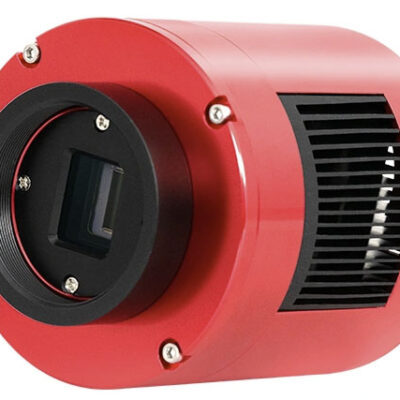
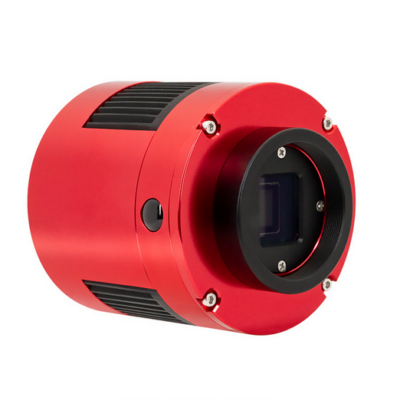
The CCD adaptor supplied as standard is suitable for ATIK cameras. (13mm mechanical backfocus). We offer a wide choice of adapter rings in our accessories catalog.
The guiding camera is C-mount.
Going further with Lhires III
In addition to the astrophysical knowledge it can provide, the Lhires III is also a tool for collaboration between amateur and professional astronomers: studying Be-type stars, tracking variable stars, etc. Numerous scientific papers have been based on observations with a Lhires III.
The support of a large community
The Lhires III is widely used around the world, and you can find many examples of use and advice on the Spectro-L discussion list: https://groups.io/g/spectro-l or on the spectroscopy forum: ARAS.
Specifications
Resolution power R ~18000 (with 23 µm slit)
Dispersion of 0.012nm (9µm pixels, around Hα)
Aperture F/10
Littrow architecture (the same achromatic doublet serves as collimator and lens)
Adaptor rings for different types of detectors: CCD cameras, Digital Cameras, etc.
Mirror slit for precise guiding (4 positions 15/19/23/35 µm).
Slit length 8 mm
Wavelength selected per micrometre throughout the visible range (400-700 nm)
Supplied in a hard case, with an eyepiece holder and a set of tools.
Composition
The Lhires III spectroscope
The interchangeable slit (15-19-23-35µm)
Schmidt-Cassegrain telescope interface
CCD adapter (for camera with 13mm back focus)
Eyepiece holder (for observing the Sun’s spectrum by eye; eyepiece not supplied)
Documents
The User Guide contains:
→ Setting the Lhires III
→ Your first steps in spectroscopy
→ Reminders of theory
→ Some projects
Note: this document corresponds to the first version of Lhires III. Some parts are obsolete.
Lhires III+ update manual (argon-neon calibration module and motorised flat, guide mirror modification, new 0.8x guide port)
Note: this update is now integrated in all Lhires III
Assembly instructions: for the AUDE project, the Lhires III was supplied as a DIY kit. The assembly instructions can help you understand the inner workings of the spectroscope.
Set of drawings to help you integrate the Lhries III with your equipment.
A STEP file giving the external volume of the Lhires III for integration in your telescope project, for example.
Solar spectrum with comments, made by Olivier Garde with his Lhires III.
On August 8, 2021, the recurrent nova RS Oph was observed in outburst at magnitude V = 5. The amateur community immediately mobilized to realize many spectra at various resolutions with various spectrographs (with resolving powers R = 600 to R = 30,000).
To provide the best experiences, we use technologies such as cookies to store and/or access device information. Consenting to these technologies will allow us to process data such as browsing behavior or unique IDs on this site. Failure to consent or withdrawal of consent may adversely affect certain features and functions.
Functionnal
Always active
Storage or technical access is strictly necessary for the purpose of legitimate interest to allow the use of a specific service explicitly requested by the subscriber or the user, or for the sole purpose of transmitting a communication over an electronic communications network.
Preferences
Storage or technical access is necessary for the purpose of legitimate interest to store preferences that are not requested by the subscriber or the person using the service.
Statistics
Storage or technical access that is used exclusively for statistical purposes. Storage or technical access that is used exclusively for anonymous statistical purposes. In the absence of a subpoena, voluntary compliance by your Internet Service Provider or additional recordings from a third party, Information stored or retrieved for this purpose alone generally cannot be used to identify you.
Marketing
Storage or technical access is necessary to create user profiles in order to send advertisements, or to follow the user on a website or on several websites with similar marketing purposes.